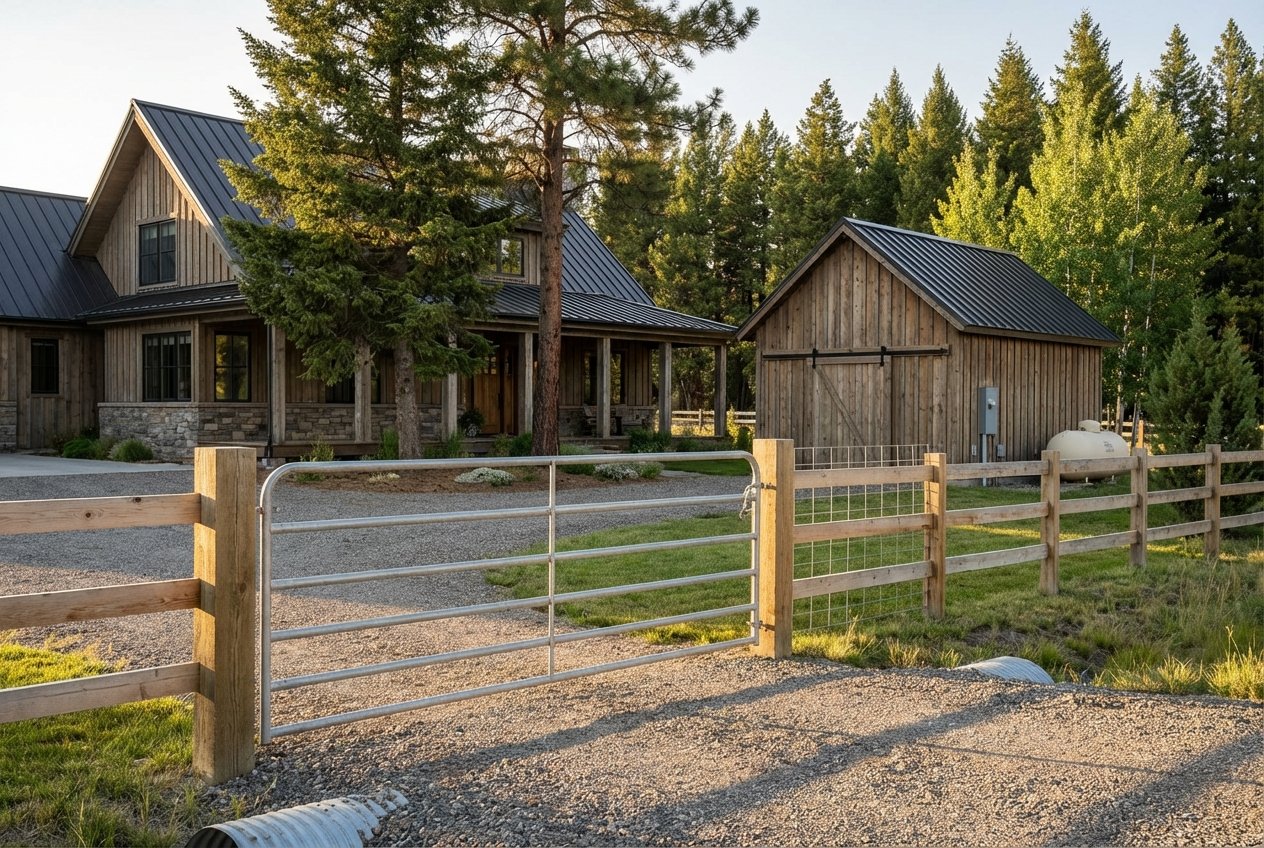
Dreaming about a few Montana acres near Darby for horses, a hobby farm, or simply more elbow room? The setting is hard to beat, with the southern Bitterroot Valley’s mountain views and quick access to public lands. The key is knowing what makes a parcel truly buildable and functional before you fall in love. In this guide, you’ll learn how water, septic, access, utilities, soils, flood, wildfire, fencing, permits, and taxes shape your decision. Let’s dive in.
Why Darby acreage is different
Small acreage around Darby blends private land and agricultural tracts with close proximity to the Bitterroot National Forest. That mix drives strong demand. The single biggest constraint for most parcels under 20 acres is not the house plan. It is water and septic regulation. Montana’s subdivision sanitation review and exempt well rules often determine buildability long before construction costs. Start by confirming whether a lot has a valid Certificate of Subdivision Approval (COSA) and what it allows through the Montana Department of Environmental Quality’s subdivision program pages at the DEQ engineering and subdivision review.
Stage 1: Quick screening before you tour
Access and road maintenance
Confirm how you legally reach the property. Is it a county road, a private road, or an easement across a neighbor’s land? Ask who maintains and plows the road in winter and whether there is a recorded maintenance agreement. Ravalli County Planning can clarify right of way status and local rules on zoning and planning. A long private drive may mean budgeting for your own plow or a contract service.
Water and water rights
Ask if the parcel has an existing well or a municipal connection. For a new private well, Montana treats small domestic groundwater as an exemption up to specific limits, but how those rules apply depends on subdivision status and project details. Request any recorded water right, well logs, and proof of filing for exempt wells. The DEQ subdivision review often shows approved well locations on the COSA. Do not assume you can always “just drill a well.”
Septic, sanitary restrictions, and the COSA
Lots created after 1961 and under 20 acres typically have a COSA that sets where the well and drainfield can go, bedroom counts, and sometimes the number of dwellings. If there is no COSA, Ravalli County Environmental Health can require site evaluations and groundwater monitoring before issuing a permit. Review the county process and permit steps on the Ravalli County septic permits page. Plan extra time if you hope to move the approved house site or add bedrooms, since that can trigger review.
Utilities and internet
Electricity is typically provided by Ravalli Electric Cooperative or NorthWestern Energy. Confirm which company serves the area, whether there is an existing meter, and any potential line extension costs and timelines. Propane is common for heating. For internet, rural coverage varies by exact address. Check options using BroadbandNow’s Darby availability and verify service to the specific parcel.
Stage 2: Site-level due diligence
Soils, slope, and site work
Soils and topography drive driveway costs, foundation design, and septic feasibility. Use the NRCS Web Soil Survey to get a preliminary feel for soil types, then plan a site-specific soils and percolation test. Shallow bedrock, high groundwater, or steep slopes can lead to engineered septic systems and higher build costs.
Floodplain and riparian setbacks
Check the FEMA Flood Map Service Center to see if the lot is in a mapped flood hazard area. Being in or near a floodplain can affect septic siting, building elevation, and insurance. Start your review at the FEMA Flood Map Service Center and ask Ravalli County whether floodplain rules apply to your proposed building site.
Wildfire exposure and the WUI
Darby sits near extensive forestlands, so many parcels fall within the Wildland Urban Interface. Expect to plan for defensible space, address signing, and safe access for fire apparatus. Ravalli County maintains a Community Wildfire Protection Plan and related maps. You can learn about the county’s recent CWPP update through this local news notice on the CWPP process.
Fencing, livestock, and neighbor responsibilities
If you plan for horses or small livestock, confirm recorded boundaries and discuss partition fences with neighbors. Montana statute outlines shared obligations for adjoining owners. Read the partition fence statute for context at Montana Code 70-16-206. A current survey helps avoid disputes.
Outbuildings, barns, and permits
Zoning, setbacks, and sanitation approvals determine what you can build and where. Unpermitted outbuildings can complicate financing or future sales, especially if drains or wells were impacted. Check allowed uses and setbacks with Ravalli County Planning on zoning and planning, then match those details to any COSA conditions.
Property tax and ag classification
Some Montana parcels qualify for agricultural valuation, which can reduce assessed value if you meet activity and income thresholds. Small hobby acreage used casually may not qualify. Review the state’s rules at Montana Code 15-7-202 and confirm current status with the county assessor.
Budgeting for rural site costs
Every site is different, but a realistic budget helps you compare properties:
- Septic systems. Gravity systems are typically the least expensive. Mound or advanced treatment can cost several times more depending on soils and groundwater. For a helpful practical discussion of off-grid and rural costs in Montana, see this deep-dive on site systems.
- Well drilling. Depth and geology vary widely. Ask local drillers for quotes and require a satisfactory flow test if there is an existing well.
- Driveways and crossings. Long driveways, culverts, or bridge elements can add five figures, especially on steep or rocky ground.
- Electric service. New line extensions can be several thousand to tens of thousands based on distance and terrain. Confirm with the serving utility before final budgeting.
Your offer strategy and smart contingencies
Before you offer, request the deed, plat or certificate of survey, COSA, septic permits, well logs, and any irrigation or water district details. Confirm access type and recorded maintenance agreements. Once under contract, line up a soils and perc test, a septic site evaluation, and well testing. Ask your title company to search for easements, sanitary restrictions, conservation easements, and any covenants.
When writing your offer, consider contingencies for septic and COSA acceptability, water availability and well flow, and a clean title free of uninsurable access or unexpected sanitary restrictions. If you intend to relocate a building site or add a dwelling, include time for potential DEQ review.
Quick checklist to copy
Use this list to screen parcels and guide your due diligence:
- COSA and septic documents, including approved lot layout and bedroom limits
- Well logs, water right documents, or exempt well filings
- Access details and any recorded road maintenance agreement
- Utility provider confirmation, meter status, and line extension estimate
- Address-level internet options and speeds
- NRCS soils map plus site-specific soils and perc test plan
- FEMA floodplain check and county floodplain determination if needed
- Wildfire/WUI exposure and defensible space considerations
- Title review for easements, CCRs, conservation easements, and sanitary restrictions
- Outbuilding permits and zoning setback compliance
- Current tax classification and any ag valuation documentation
Who to call
- Ravalli County Environmental Health for septic permits and site evaluations.
- Montana DEQ for subdivision and sanitation review, COSA questions, and process steps.
- DNRC Water Resources for water rights and exempt well filings.
- Ravalli County Planning and Zoning for zoning, setbacks, and floodplain determinations.
- Local electric provider for service, outages, and line extension policies.
- Local fire district for WUI guidance and defensible space planning.
Work with a local advisor
Buying small acreage near Darby is rewarding when the parcel matches your plans for water, septic, access, and use. A careful two-stage approach helps you avoid surprises and focus on the properties that truly fit. If you want a seasoned guide who blends land and construction know-how with a calm, client-first approach, connect with Susanne Schmidt to talk through your goals, timeline, and short list.
FAQs
What does a COSA mean for building on Darby acreage?
- A Certificate of Subdivision Approval sets where wells and drainfields may go, limits bedrooms or units, and can govern building areas. Review it early through the county or the DEQ engineering and subdivision review.
How do exempt wells work for small parcels in Montana?
- Montana allows certain small domestic groundwater developments as exempt, but details depend on subdivision status and project specifics. Ask for recorded filings and confirm with DEQ and DNRC before you rely on a new well.
How can I check if a parcel is in a floodplain near Darby?
- Look up the address or coordinates at the FEMA Flood Map Service Center and then ask Ravalli County whether floodplain rules apply to your building site.
What should I know about wildfire risk around Darby?
- Many parcels are in the WUI, which affects design, insurance, and defensible space planning. Review local CWPP updates such as the news notice on the CWPP process and consult your local fire district.
Can a small horse property qualify for Montana ag tax status?
- Agricultural valuation requires meeting activity and income thresholds. Small hobby use alone may not qualify. Review rules in Montana Code 15-7-202 and confirm with the county assessor.