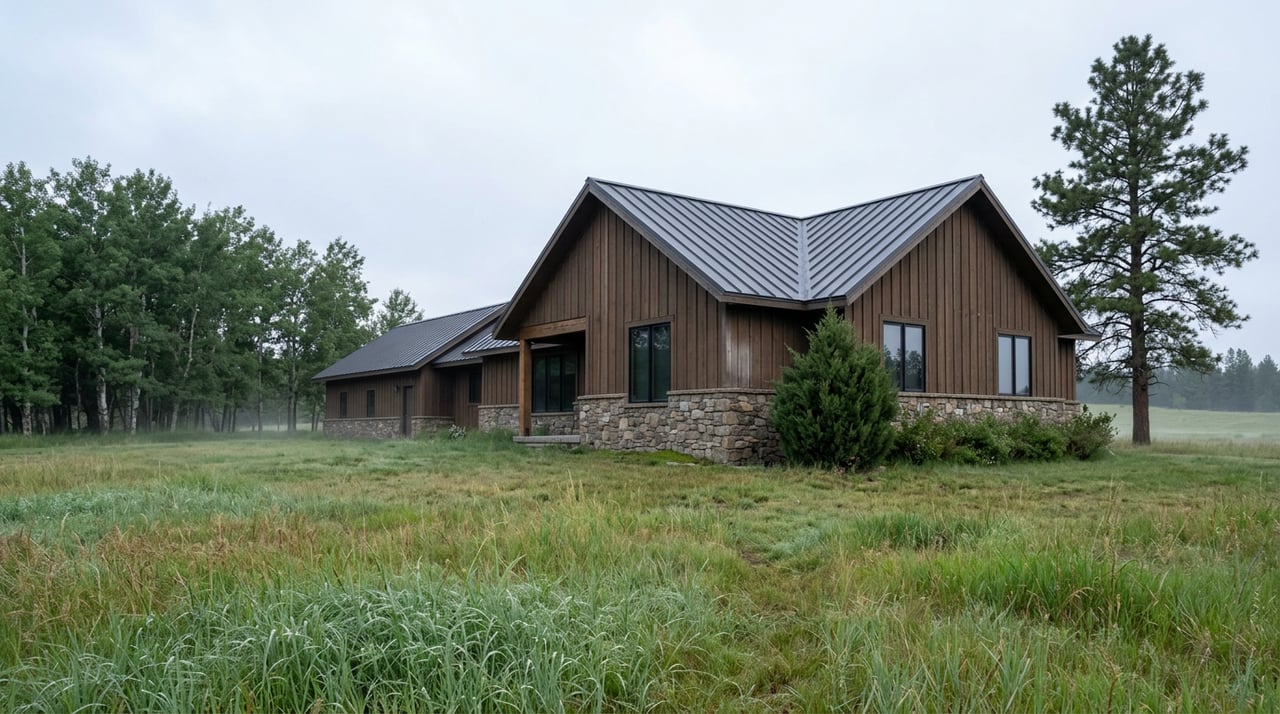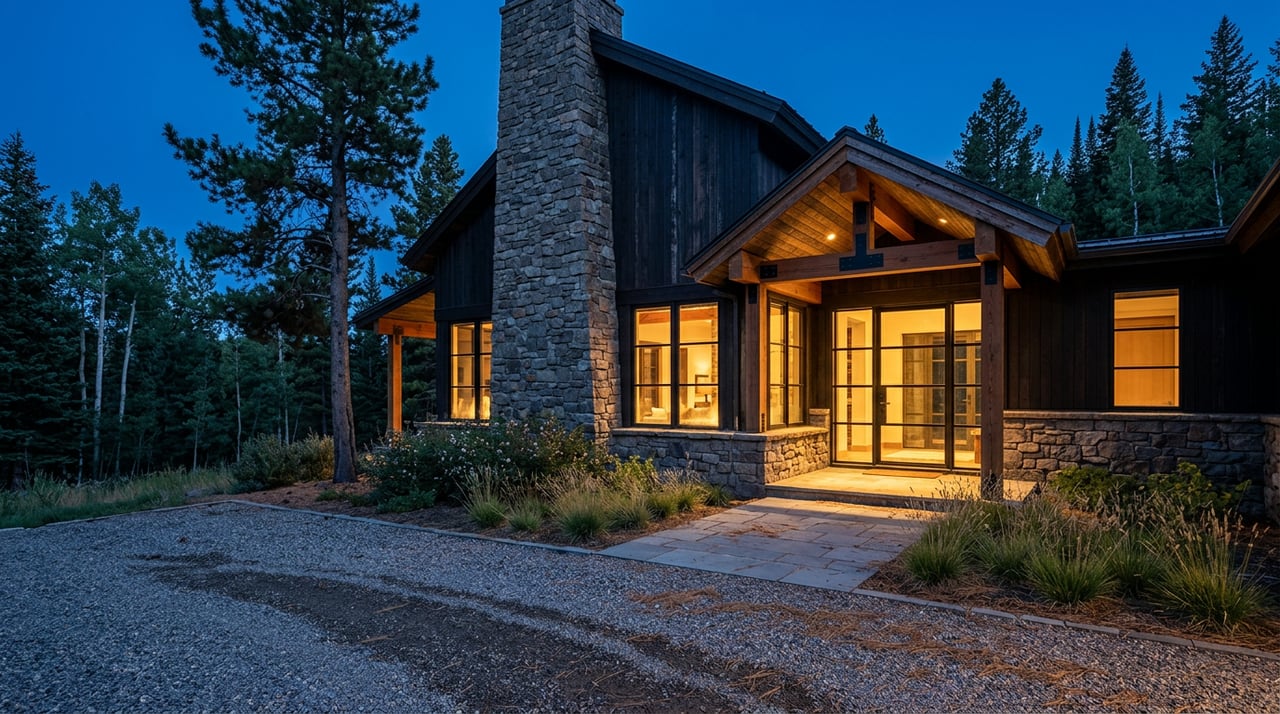
Pull up three different sites for Hamilton, Montana home prices this week and you will get three different answers, and not by a little. One national portal puts the median sale price at $436,000. Another says $673,500. A third algorithmic estimate lands at $500,243. All three claim to describe the same month, the same town, the same market.
None of them are wrong. They are measuring different slices of a market that is more dispersed than its size would suggest, and the dispersion has a shape you can trace to two specific addresses: a brand-new condo building going up along the Bitterroot River, and a gated golf community built around a Tom Fazio-designed course a few miles away. Understand what's happening at those two poles and the conflicting numbers stop being confusing. They start being useful.
Same Zip Code, Two Markets
At one end of Hamilton's 59840 zip code, Canyon Falls Condominiums is finishing construction along the Bitterroot River, close to downtown shopping, dining, and the hospital. As of early August 2026, a 741-square-foot, two-bedroom unit there was listed at $310,500, and a slightly larger 852-square-foot unit with two bathrooms was asking $352,500. The building is scheduled to complete in fall 2026. This is new, well-built, entry-level inventory, and it moves.
At the other end, the Stock Farm Club sits on 2,600 gated acres built around its Fazio golf course. A single building lot inside the gates listed for $2,395,000 earlier this year, before a home is even built on it. Search the same 59840 zip code and, as of June 2026, you'd find a one-bedroom condo asking $439,000 within a few miles of other new listings priced at $2.75 million and $3.5 million.
Both of these are Hamilton. Both show up in the same citywide statistics. And when only a handful of transactions close in a given month, which few properties happen to sell determines whether the "median" that month looks like Canyon Falls or Stock Farm.
The number a portal shows you isn't wrong. It's the answer to a question you didn't know you were asking.
What Each Portal Is Actually Counting
Here is what three sources reported for Hamilton in mid-2026, side by side.
| Source | What it reports | Figure | Time window |
|---|---|---|---|
| Redfin | Median sale price | $436,000 | 3 months ending May 2026 |
| Movoto | Median sale price | $673,500 | June 2026 |
| Zillow (ZHVI) | Typical home value, a blended index | $500,243 | Mid-2026, down 4.3% year over year |
Redfin's figure reflects closed transactions over a rolling three-month window, with homes selling in an average of 50 days, up from 48 a year earlier. That's a reasonable, if narrow, snapshot of what actually changed hands.
Movoto's June figure is labeled the same way, a median sale price, but it's telling that the number sits almost exactly where Movoto's own separate list-price tracking has been running: $675,000 in May, $695,000 in March. When a platform's "sold" number tracks that closely with its "list" number month after month, it's worth asking whether the underlying data is really capturing closings, or whether it's leaning on asking prices and pending activity that hasn't fully settled into a sale. Movoto also counted 129 homes sold in Hamilton in June 2026, more than four times Redfin's tally of 31 sales the month before in May. That gap in sales volume alone should make any buyer pause before treating either number as gospel on its own.
Zillow's ZHVI isn't a sale price at all. It's a modeled estimate of a typical home's value across the entire local stock, smoothed to avoid the swings that come from a single luxury closing. That's precisely why it lands almost exactly between the two conflicting sale figures. It's not picking a side. It's averaging out the Canyon Falls end and the Stock Farm end into one blended number that no individual home is actually worth.
Why a Few Closings Can Move the Whole Market
Hamilton is small enough that this matters in a way it wouldn't in a larger metro. Redfin counted 31 homes sold in Hamilton in May 2026. In a sample that size, one $2.75 million estate closing and one $310,500 Canyon Falls condo closing don't cancel each other out statistically the way they would in a market moving hundreds of sales a month. They swing the median hard, in opposite directions, depending on which few deals happened to record that particular week.
This is also why Stock Farm's land and homes tend to inflate the active and list side of the market more than the sold side. A $2.4 million lot can sit listed for a long stretch while a buyer commissions plans and lines up financing for a custom build. It counts in every "active listings" snapshot the whole time it's on the market, but it might close only once, maybe not even in the same calendar year it was listed. Compare that to a Canyon Falls unit priced to move quickly in a building that's about to finish construction. It cycles through the market faster and shows up in the sold column sooner. Slow-moving high-end inventory inflates what you see when you search active listings. Fast-moving affordable inventory anchors what you see when you look at what actually closed.
The Same Pattern Shows Up Across the Valley
If you're comparing Hamilton to Corvallis, Darby, or Stevensville while house hunting, it helps to know this isn't a Hamilton quirk. Ravalli County as a whole showed the identical structure this spring: new listings carried a median asking price of $737,000, active listings on the market at any given moment carried a median of $858,000, homes that had gone under contract were pending at a median of $630,000, and homes that actually closed sold at a median of $570,000, with sellers landing close to their asking price at a 97.76% sold-to-list ratio.
Notice the order. Active listings run highest, because that pool includes everything still sitting unsold, land and luxury estates included. Sold prices run lowest, because that pool only includes what actually cleared the market. The gap between "what's listed" and "what closed" was roughly $288,000 at the county level this spring, which tracks closely with the gap you see comparing Redfin's and Movoto's numbers for Hamilton specifically.
What Number Should You Actually Use
If you're pricing a sale or sizing up a budget, the honest answer depends on what you're comparing yourself to.
If you own or are shopping for a resale home in Hamilton's ordinary price bands, Redfin's closed-sale figure and Zillow's blended estimate, both sitting in the $436,000 to $500,000 range, are the more grounded reference points. That's where most transactions actually happen.
If you're evaluating new construction or a build-ready lot, especially anything touching Stock Farm's gated inventory or comparable acreage, the active-listing and new-listing medians, running from roughly $700,000 to $858,000 countywide, are more representative of what you'll be competing against.
And if a headline number from any single portal seems out of step with what you're seeing on the ground, the discrepancy is probably telling you something real about which slice of the market that source is counting, not that the source made an error.
FAQ
Why do Zillow, Redfin, and Movoto show different prices for the same town? They're measuring different things. Redfin tracks closed sales over a rolling window. Movoto's reported figures track closely with list-side activity even when labeled as sold prices. Zillow's ZHVI is a modeled estimate blended across the whole housing stock, not a transaction price at all.
Does the gap between list and sold prices mean sellers should expect to negotiate hard? Not necessarily. Ravalli County's sold-to-list ratio was 97.76% this spring, meaning homes that actually sold went close to their asking price. The big gap shows up in the median, not in individual negotiations, because the properties still sitting active or newly listed skew toward the high end of the market.
Is this list-to-sold gap unique to Hamilton? No. The same pattern showed up in Ravalli County's broader spring 2026 data, with active listings running roughly $288,000 above closed sales at the county level. Any Bitterroot Valley town with a mix of luxury acreage and entry-level or new-construction inventory will show some version of this spread.
If you're trying to figure out which number actually applies to your budget, your timeline, or the specific corner of Hamilton you're considering, that's a conversation worth having before you make an offer or set a list price. Susanne Schmidt has spent 25 years reading Bitterroot Valley market data the way it's meant to be read, property type by property type, not headline by headline. Schedule a confidential consultation to discuss your property goals and get a read on what your specific number really is.